
Teaching and Learning
Flourishing in Faith and Learning
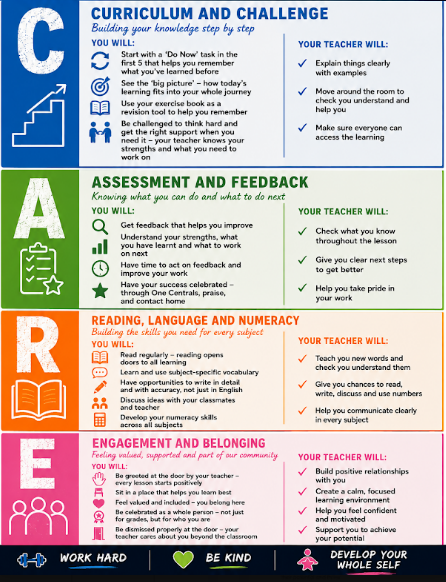
At Blessed Thomas Holford Catholic College, our BTH CARE principles guide every lesson, ensuring teaching is purposeful, inclusive, and engaging. They reflect our Catholic mission and commitment to excellence, helping every student thrive, achieve, and develop the knowledge and skills they need for life. The framework is fundamentally built to ensure all pupils can access learning and achieve their potential. High-quality teaching and responsive teaching ensure students achieve their potential and thrive.
C – Curriculum and Challenge
Sequencing learning to build knowledge over time, with adaptive teaching that ensures all students master content and achieve their potential
We provide an ambitious, knowledge-rich curriculum that builds learning step by step and inspires curiosity. Through clear explanations, purposeful challenge and appropriate support, we enable every student to develop their knowledge, deepen their understanding and fulfil their potential.
A – Assessment and Feedback
Using assessment to check understanding and provide feedback that moves learning forward, celebrating progress and achievement
We use assessment and feedback to recognise strengths, celebrate success and identify next steps. We encourage students to reflect, persevere and take responsibility for their learning, developing the confidence and resilience to continually improve.
R – Reading, Language and Numeracy
Teaching disciplinary literacy and explicitly developing vocabulary, reading and numeracy skills as the gateway to learning across all subjects
We develop reading, vocabulary, written communication, oracy and numeracy across the curriculum. These essential skills empower students to access knowledge, communicate with confidence and engage thoughtfully with the world, preparing them to make a positive contribution to society.
E – Engagement and Belonging
Creating a positive climate for learning where the Catholic curriculum is at the heart, relationships are strong, and every student thrives
We foster a culture of dignity, respect, inclusion and compassion, rooted in the teachings of Christ. Through positive relationships, consistent routines and individual support, we ensure every student feels valued and belongs to our community. We encourage all students to recognise the worth of others and live out our Catholic values through their words and actions.
Through CARE, we put our Catholic mission into practice every day. We are committed to providing an ambitious, inclusive and nurturing education that develops the whole person, enabling every student to grow in knowledge, faith and character and to become the person God calls them to be.
What are students learning?
Curriculum maps and curriculum overviews show you:
✅ What students are learning
✅ Why they are learning it
How to learn effectively?
At Blessed Thomas Holford, we want every student to develop excellent learning habits that will serve them throughout their education and beyond. Here's what we expect:
📚 Ready to Learn
- Arrive on time with full equipment and in perfect uniform
- Be prepared and focused
💪 Working Hard
- Stay engaged and on task during lessons
- Take pride in their work and maintain high presentation standards
- Complete home learning to the best of their ability
🗣️ Active Participation
- Ask questions when they don't understand
- Contribute respectfully to class discussions
- Use new vocabulary they've learned in their speaking and writing
📈 Taking Responsibility
- Act on teacher feedback to improve their work
- Use their exercise books as revision tools
- Check the My Child at School App regularly for homework and updates
🤝 Creating a Positive Environment
- Respect others' learning
- Help create a classroom where everyone feels they belong
Support their classmates
